

It’s easy to overlook, or pass over, something fascinating because it’s deemed undesirable by the many. I’ve written a couple of articles about Victorian glass on here, and how it’s exactly that. It’s not just the look of a piece too, it’s the story - or in this case stories - behind it.
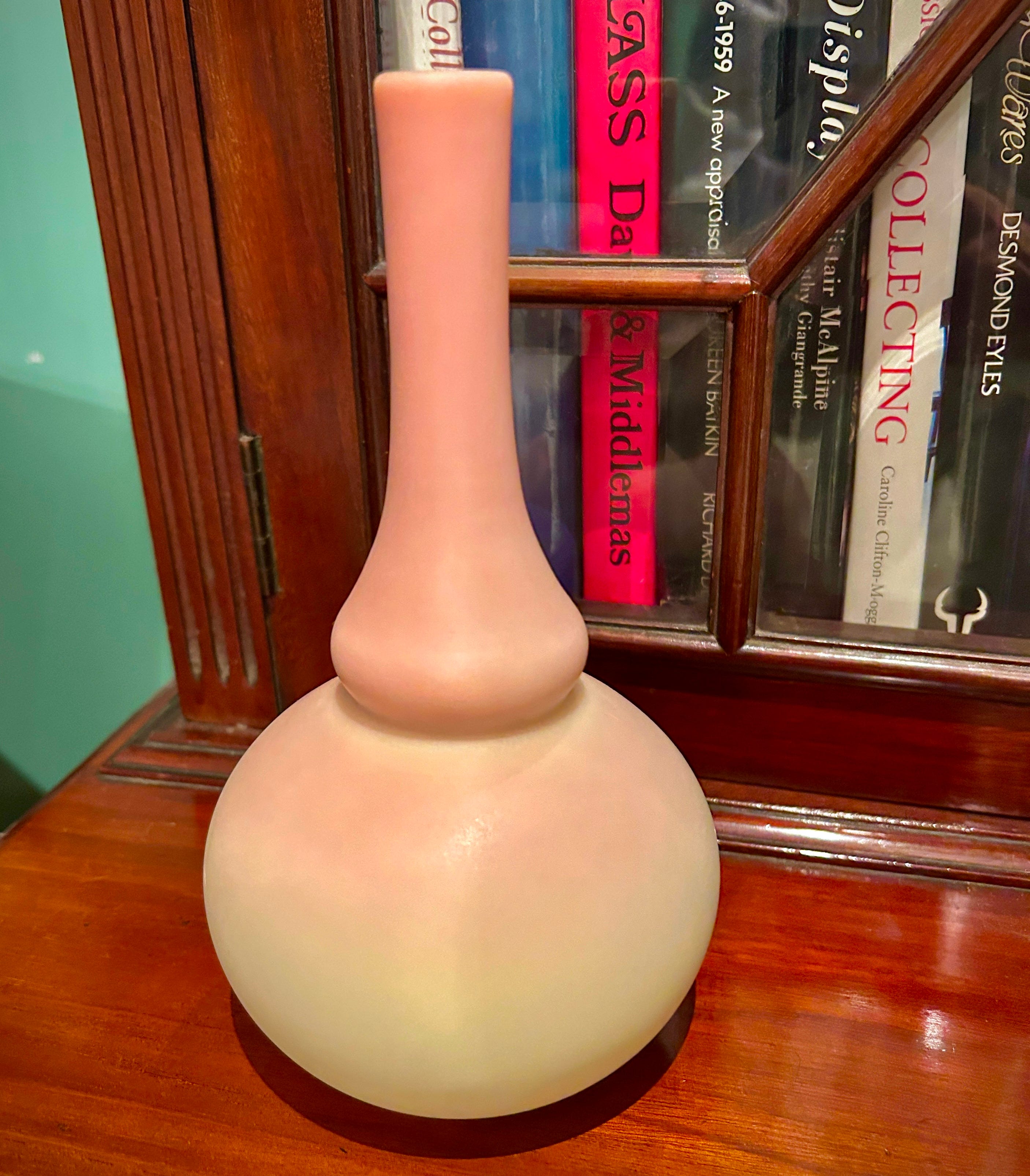
I bought this vase early last year as the colours stood out. A gentle pink fades out to a yellow with a slight light green tinge and an almost luminescent or fluorescent feel. They’re hardly the Pantone ‘colour of the year’, but they are extremely unusual, and quite unlike anything else that’s being made today. It also doesn’t look like glass, being opaque with a matte finish, which adds to the interest. All that, combined with the comfortably proportioned Chinese inspired double-gourd shape, gives it a unique and almost ancient yet avant garde (dare I say?) look. Its clean lines and colours would work well in pretty much any interior - it’d stand out in a good way in a minimalist white room, and pop on oak or mahogany furniture amidst rich, dark colours. But there’s more to it than just being eye-catching, the story behind it captures the mind too.
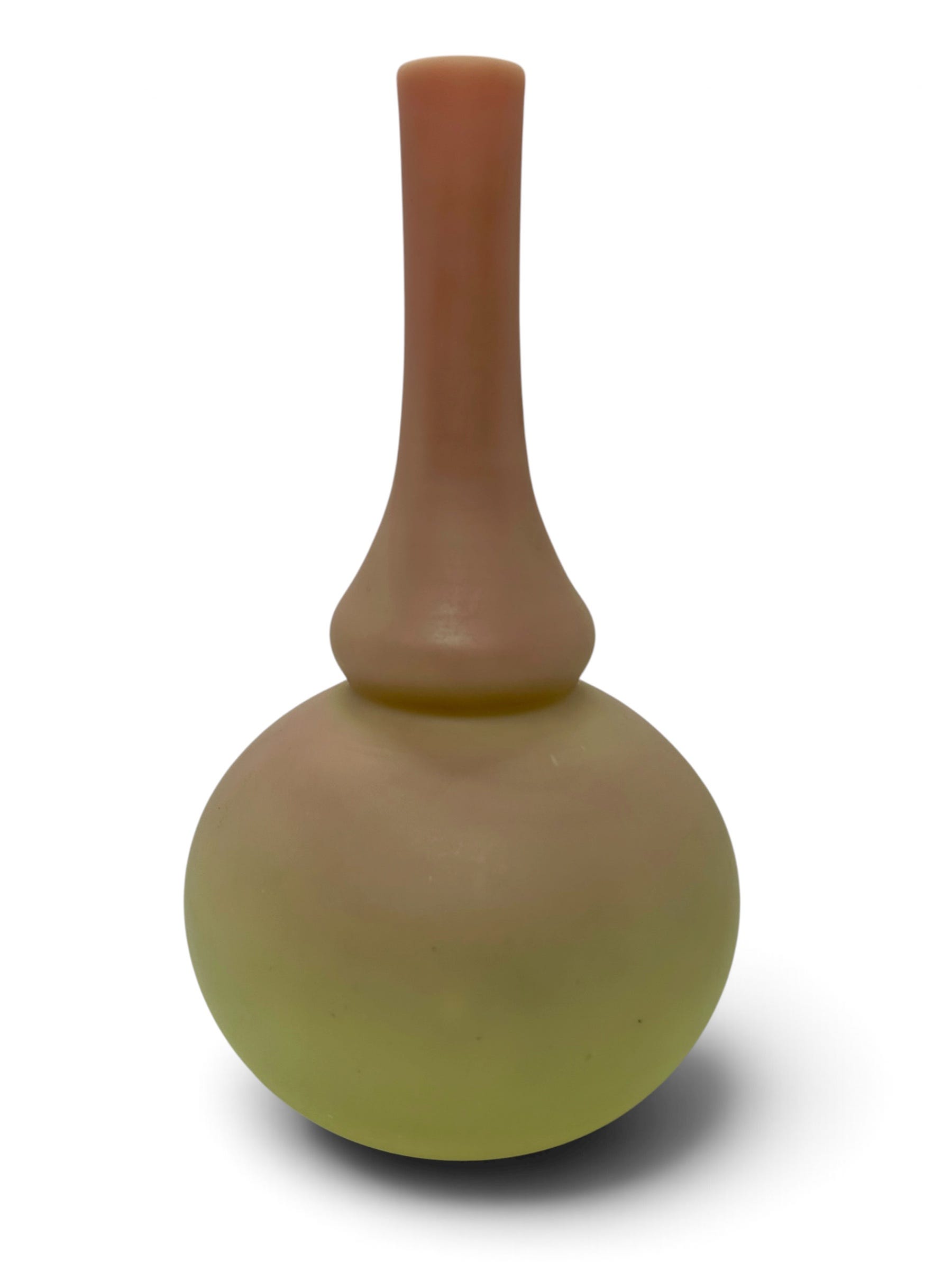
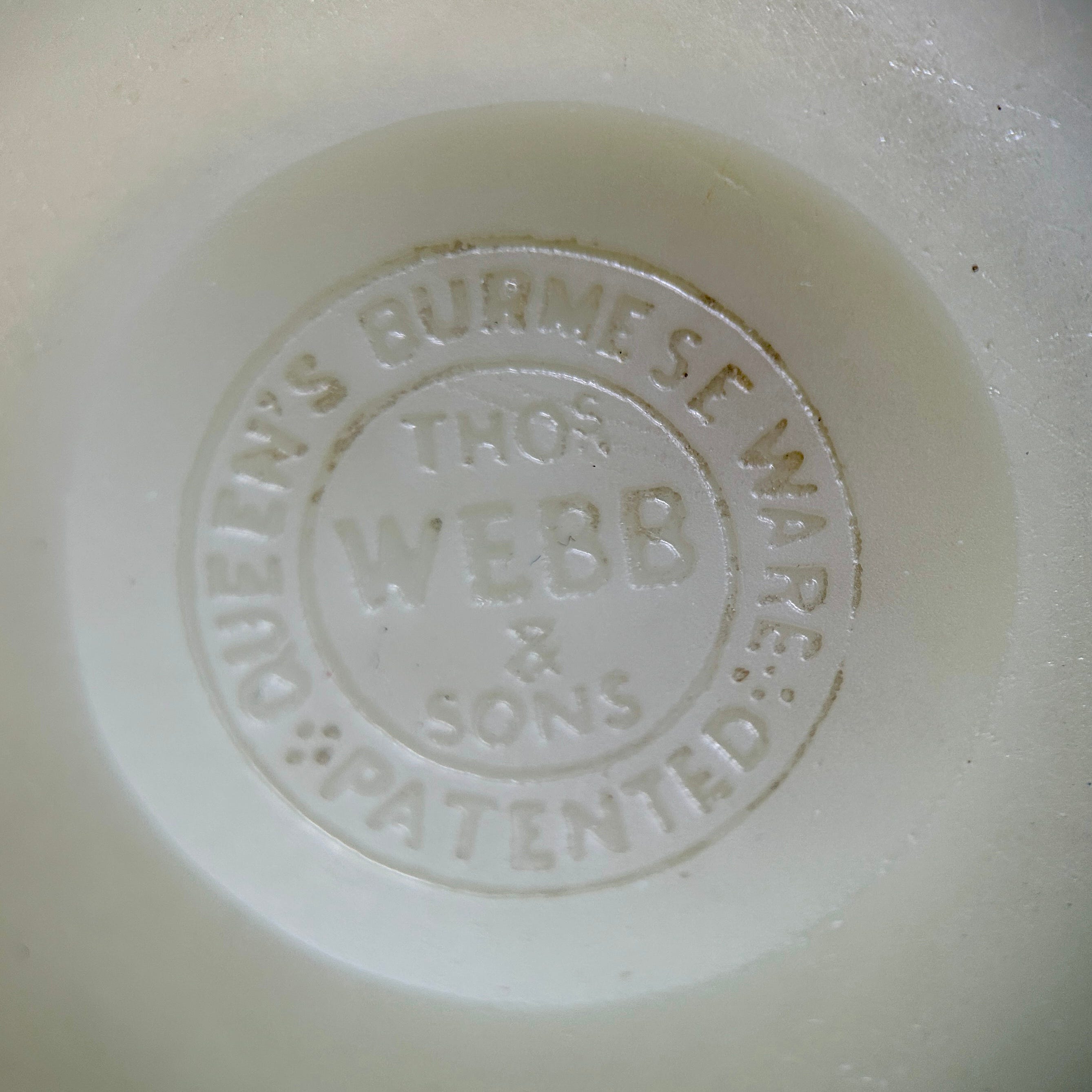
What we’re looking at is an example of ‘Queen’s Burmese’ glass, made in England by Thomas Webb from 1886 until the late 1890s, thereby placing it firmly in the High Victorian style and period. Unlike most glass, this example is marked on the base with an acid-etched circular mark reading ‘QUEEN’S BURMESE WARE PATENTED’ on the outside and ‘THOs WEBB & SONS’ on the inside. That mark was trademarked on 11th September 1886, making this an early piece, as a great many later examples (and smaller sized forms) are typically not marked at all.
Queen’s Burmese, though. Weird name, right? So let’s pick that name apart.
Rise of Empire
The name was given to the range as the colours were said to resemble a sunset in Burma. The person who made this comment is reputed to have been Queen Victoria herself, after she was presented with a group of this type of glass for use at Buckingham Palace. The name was jumped upon by its makers, not just because it was the Queen who said it. Burma brought forth exotic and tropical thoughts amongst the buying public, which is a good sales line, and Burma itself was also topical as well as tropical at the time. The final part of Burma was added to the British Empire in 1885 when Mandalay was occupied and King Thibaw of Burma was deposed, thereby incorporating all of Burma into British India in January 1886. But the colouring clearly existed before Queen Victoria allegedly saw and commented on it. So how did they come about?
The answer isn’t unusual, and what lies behind it still happens with us today, even over 150 years later. Moreover, it’s probably happened for the entire history of society.
