
Small Pleasures: Lonely Singleton Candlesticks
A Single Doulton Silicon Ware Candlestick

Some people buy single chairs. I buy single candlesticks. Quite a lot of them, in fact. They take up less space for a start. Typically thought of as part of a pair, so of no real value when they aren’t with their partner, I can’t resist these singletons. This ‘small pleasure’ of mine cost £2.91 from the vast, sprawling Battlesbridge Antiques Centre some time ago. Why so precise? Well, the ticket said £3, they didn’t take cards for such a small amount back then, and that was all the cash I could scrape together from about my person. Yes, the price is low, but looking closer at it, it’s really, really very low. After all, what else does £3 buy you today?
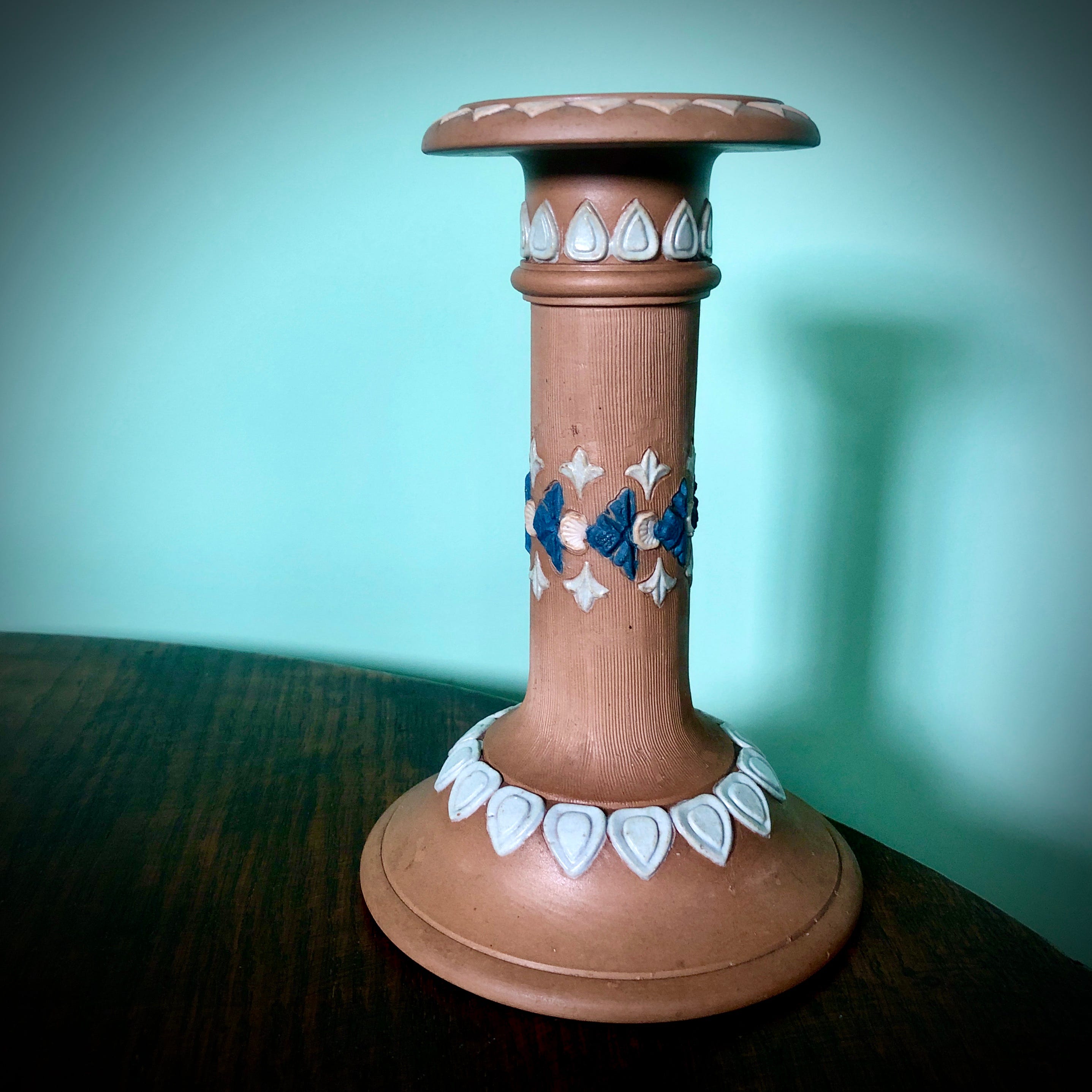
Candlesticks are a bother, most people think. Colonel Crathorne, who taught me ‘Etiquette in the Nineties’ as part of my school’s General Studies courses said it was vulgar to use candlesticks at lunch, so they only get used at dinner in our home. Although candles are usually associated with dark winter nights, as the recent heat bubble continues, I’ve found great pleasure in lighting our garden table with them during the long, balmy nights it has created. My partner often travels for work, and there’s something neat and tidy - and somehow very right - about eating dinner for one largely lit by a single candle. Or just taking in the night air and the sounds of a slowing city moving towards sleep.
And if it’s the two of us, or we’re giving dinner to friends, I amass all my singleton candlesticks together to provide enough light. And what a warm, welcoming and wonderful light this harlequin display from across the ages gives. So much better than those bright and stark electric garden lights. It does wonders for one’s complexion, even if only temporarily!
So what did my £2.91 buy me? Maybe not everyone’s cup of tea, actually. It’s Doulton stoneware, a category of ceramics that has seen not just drops - but plummets - in desirability and value over the past decades. Once a sturdy backbone of the antiques business, much Doulton, and especially their stoneware, is now seen by most seen as boring, browny beige dust collectors. Worse, their fussy, fusty, over-complicated Victorian decoration is deemed a mismatch for today’s modern and often minimalist homes, and they are usually passed over with something approaching disgust.
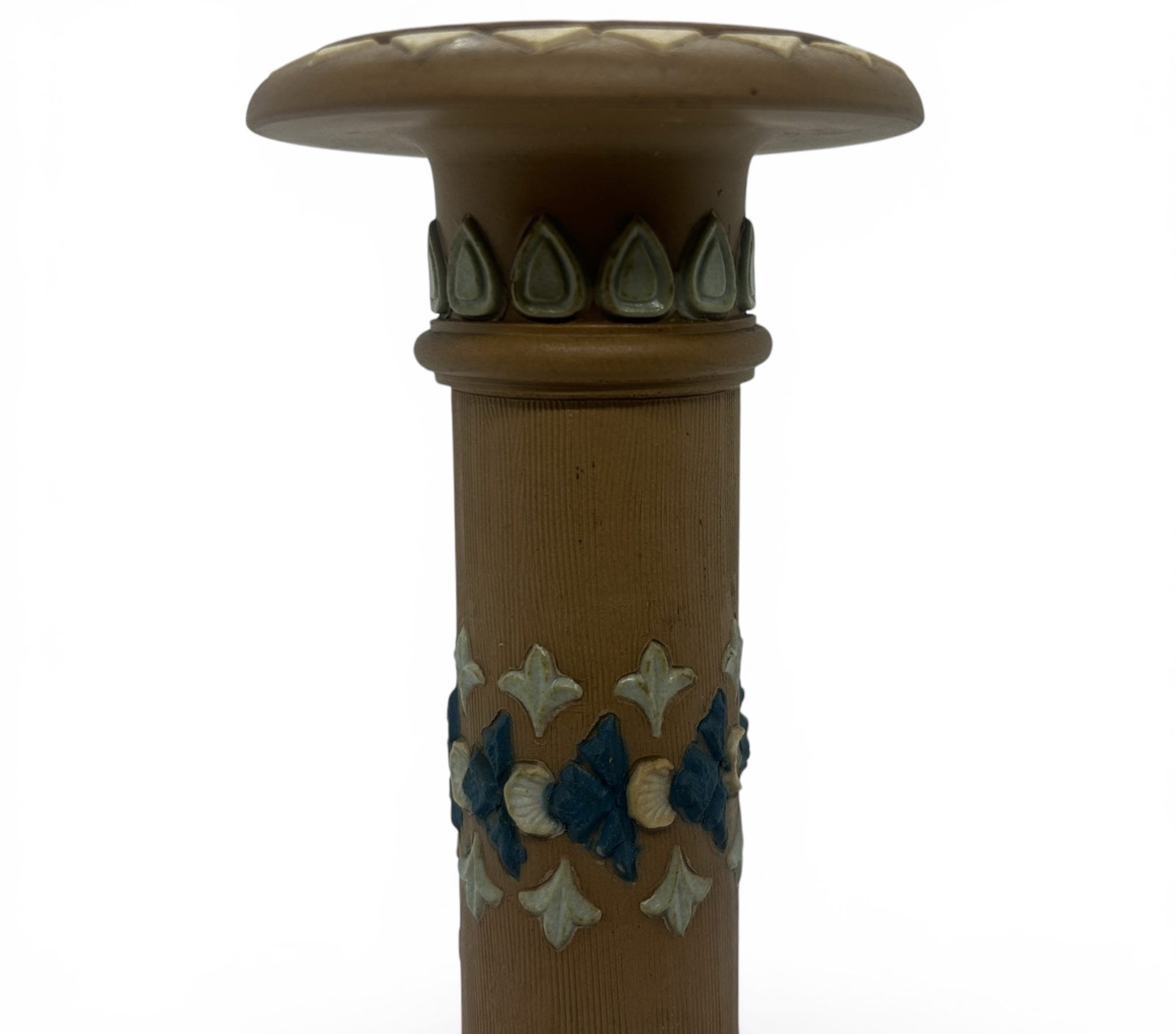
And no more so than their Silicon Ware range, introduced in 1880, with its matte typically brown or beige bodies embellished with an array of often complex decorative motifs. Along with their Slater’s Patent range, it’s definitely deep in the doldrums. It was made from a stoneware body that was fired at high temperatures, making it very resilient and durable, and it reached the height of its popularity from about 1890-1914 when many hundreds of thousands of pieces were sold to middle class Victorians and Edwardians. It’s a little like Wedgwood’s Jasperware to see and handle, but in a light terracotta colour and with a softly tactile satin eggshell finish. It’s just not what people respond to visually today, or want in their homes.
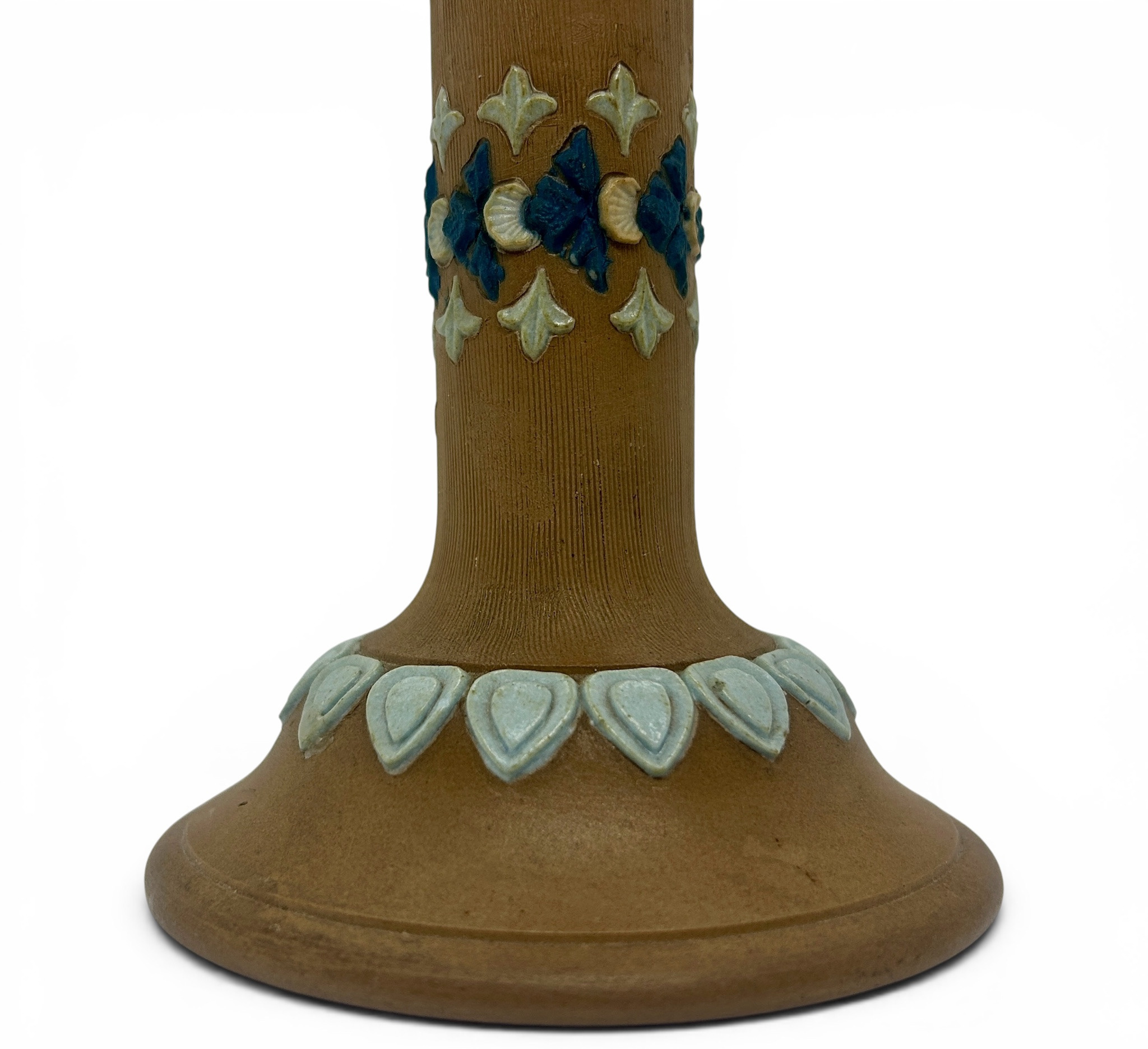
But I think they’re worthy of more than a second glance. First off, consider the craftsmanship and how it was made - the body was formed from a lump of clay by hand on a wheel by a skilled and experienced Victorian potter. Look at the shape, which is so very even and in proportion. And then look at the details of the shape, from the finely finished domed, gently ogee curved foot, up the column to the capital-like neck, and finally to the subtly stepped tray.
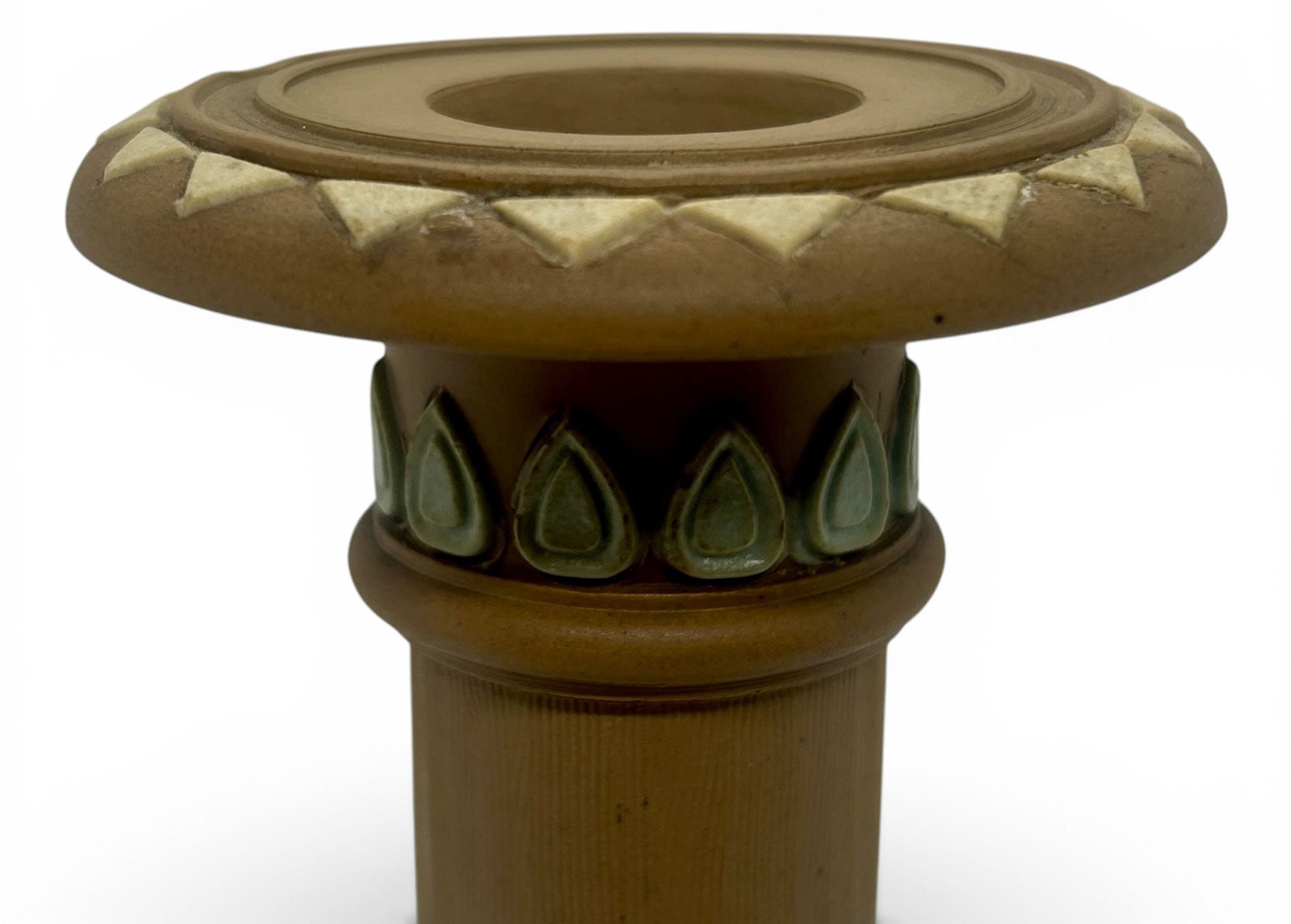
Then allow your eyes to wander over, and wonder at, the decoration. Here we have a series of light and dark blue and beige motifs ranging from stylised leaves to shells to fleurs de lys to triangles, all arranged in perfectly straight bands. Each motif was applied by hand using a technique known as ‘sprigging’, similar again to Wedgwood’s famed Jasperware range. Each single motif is a separate, thin piece of stained clay that was formed in a shallow mould, removed from the mould with a flexible knife and then applied to the body, being ‘stuck’ to it using liquid clay known as slip. The vertical sgraffito lines were then evenly scored into the column by hand.
That’s all really quite something, just consider the skill, experience and time needed to pot and then decorate it — all by hand. And, personally, I find this decoration rather tasteful, rather than over-ornate. Not that I’d have minded a bit of over-ornate High Victorian decoration - I’m a maximalist, rather than a minimalist, and more is definitely more. I’d also have liked it if it was a little more Art Nouveau in style, but you can’t have everything, especially for less than three quid.
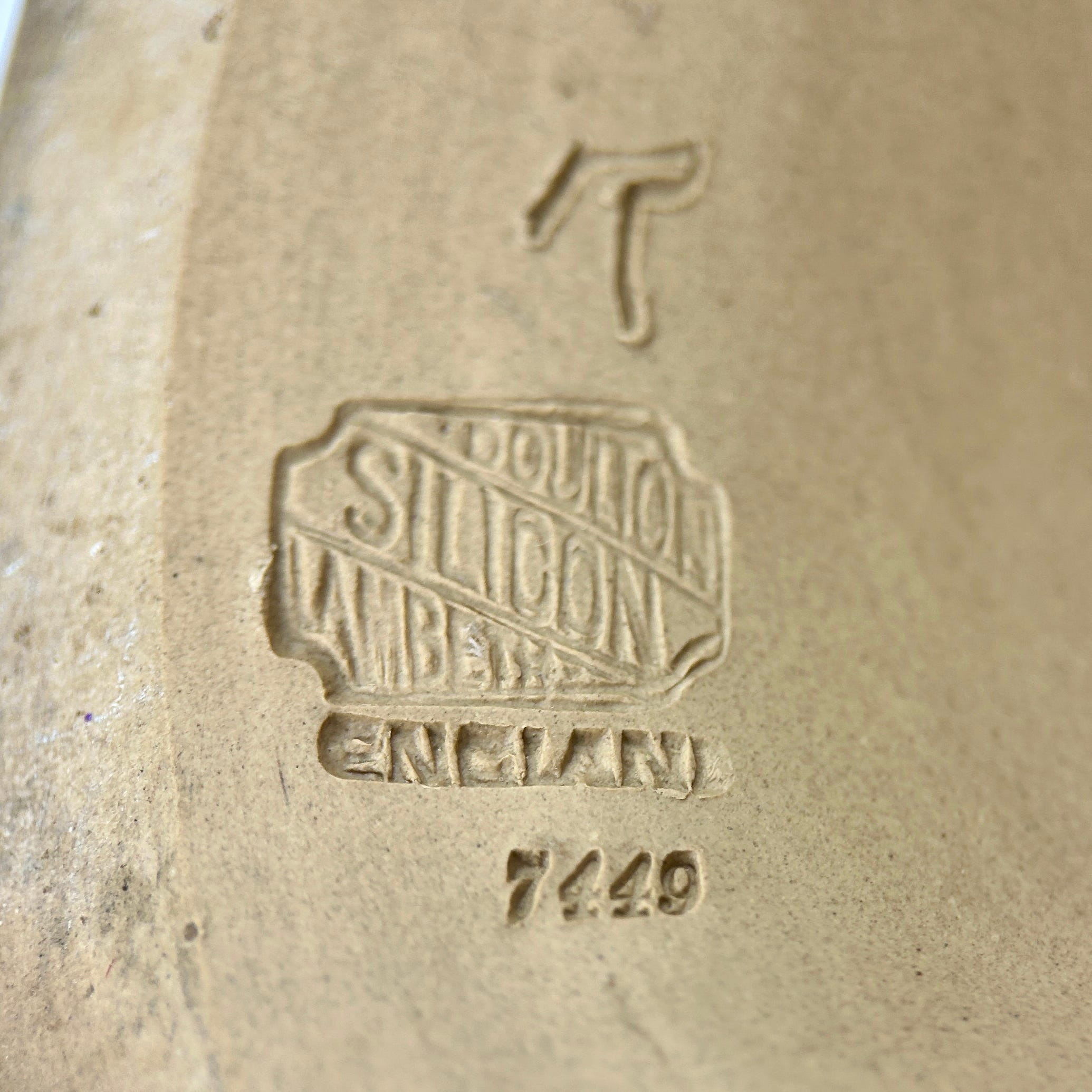
The other wonderful thing about much Doulton is that the marks on the base can reveal so much behind a piece. The style and type of factory mark is one thing, but the decorators, and sometimes the modellers, often marked the base with a symbol, initials or letters. These in particular provide a direct and very human link with the past. The Silicon Ware mark on mine was used from c1880-1932, and the addition of ‘ENGLAND’ underneath dates this piece slightly more tightly to 1891-1932.
My feeling is that it was probably made around 1900-1910. Or maybe it’s a decade or so later - do I detect something lightly Egyptian about the decoration? The ‘7449’ number is the shape number, and sadly the ’T’ modeller’s or decorator’s monogram is untraceable. But it’s still a trace of its human maker and his or her skill and experience. And, of course, that ingenuity, inventiveness, quality and skill of British Victorian manufacture. A moment in decorative arts at the high point of Britain’s success. How things have changed, a century and a bit later…
So it’s back to my garden for this one tonight, and thankfully it’s blissfully cooler out there now. We’re also only about 10 minutes walk to the remains of the Doulton factory on the South Bank, so by in being in our home, it’s almost kinda come home.
In ‘Small Pleasures’, I explore and celebrate the antiques that enrich our everyday life - beautifully made, affordable objects that combine craftsmanship, practicality and historical, decorative appeal. Sustainable by their nature and timeless in design, they’re the pieces you’ll enjoy living with and using every day.