
5 Minute Expert: Chintzware
Will an old favourite make a return?

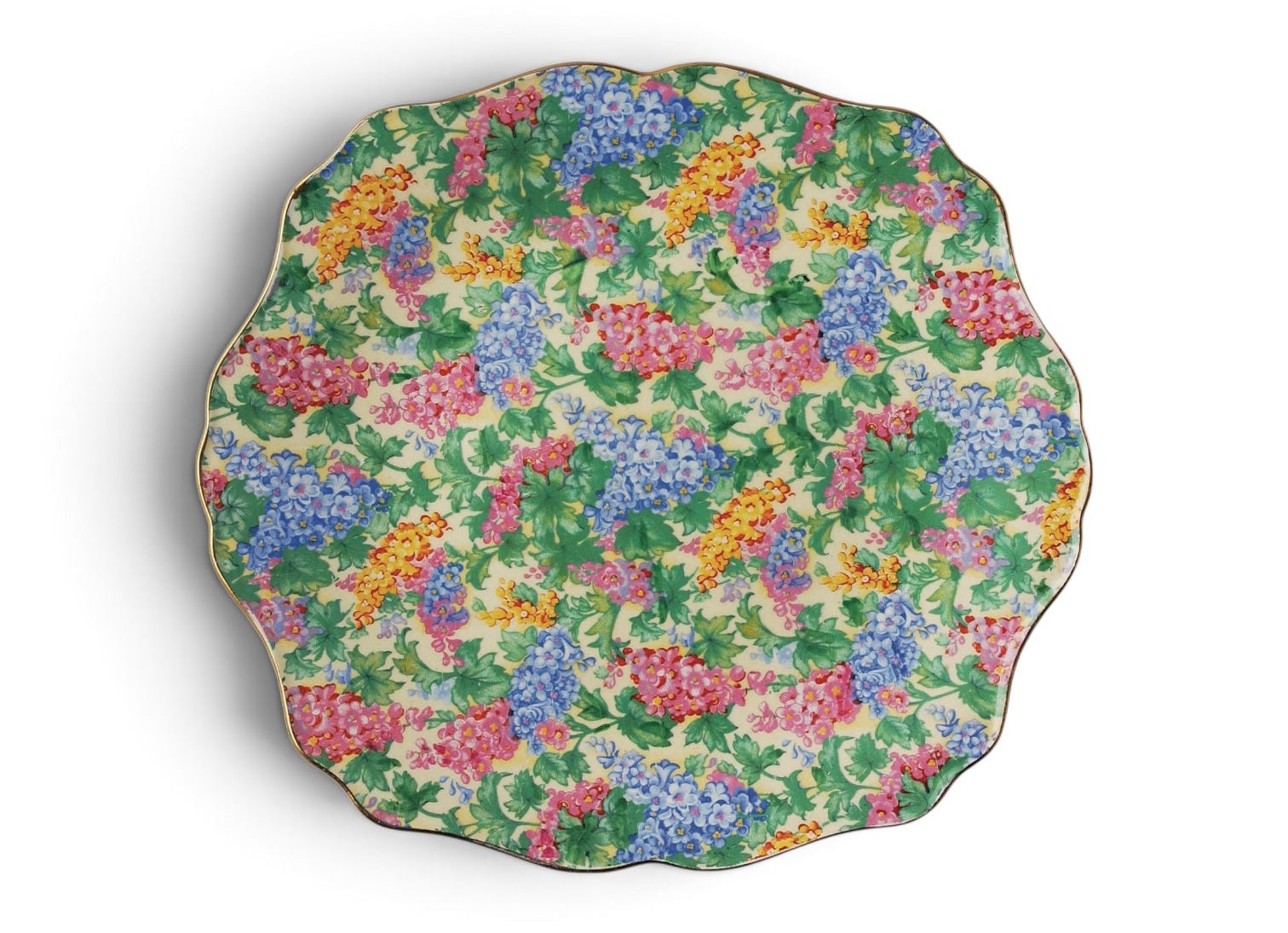
Ah, these long, languid Summer days. Few ceramics match them as well as chintz ware does, with its associations of tea with the vicar or granny in the garden, surrounded by herbaceous borders. Visually, chintz is the traditional English country garden tipped onto a plate. In terms of profile, it’s kind of the Midsomer Murders of the antique ceramic world - but without the murders, obviously. It’s gentle, kindly, not grand and warming like a nice bath. But it’s been out of fashion for nearly the last two decades, probably because it’s too busy and florid (or horrid?) for many living in Ikea-driven Scandinavian minimalism, but now that Grandmillennial chic has arrived and looks set to stay, things have begun to change.
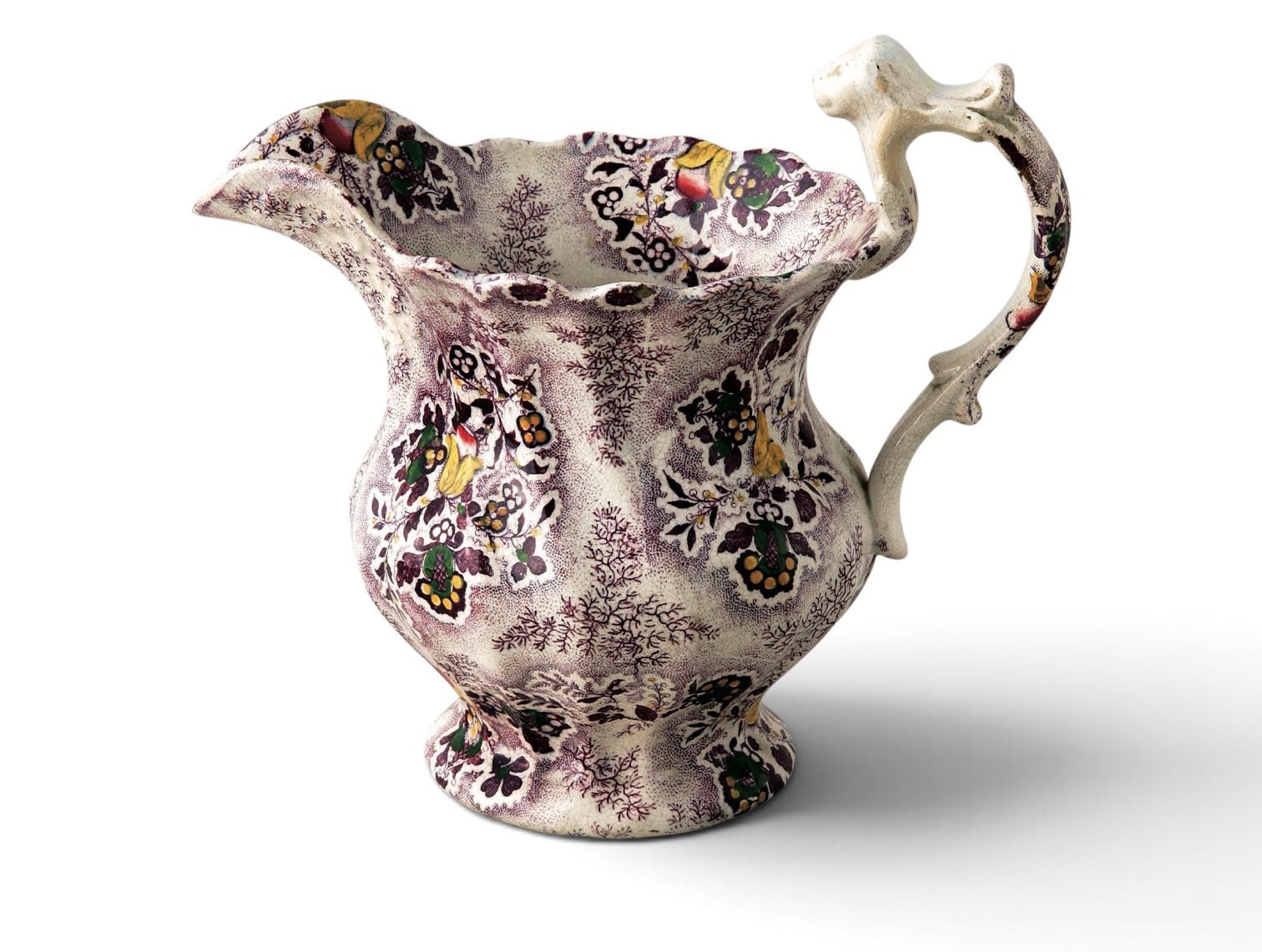
Chintz ware was produced from the 19th century onwards, and enjoyed two ‘golden ages’ in the 1930s and 1950s. The designs were originally derived from the intricate patterns printed on fabrics imported to Britain from India from the early 19th century onwards. Dressing table sets and jugs dominated earlier production, with tea wares becoming more popular from the early 20thC onwards.
Royal Winton, produced by Grimwades, is the most sought-after name. The company was also the most prolific and produced over 60 patterns, many of which look identical at first glance. If you’re building up a set in one pattern, pay close attention when out in the field buying! Other makers include James Kent, Shelley, and Crown Ducal. All pieces were transfer-printed, regardless of what granny told you about every flower being handpainted. Look closely and you should see at least one line breaking the pattern somewhere, indicating a join in the transfer.
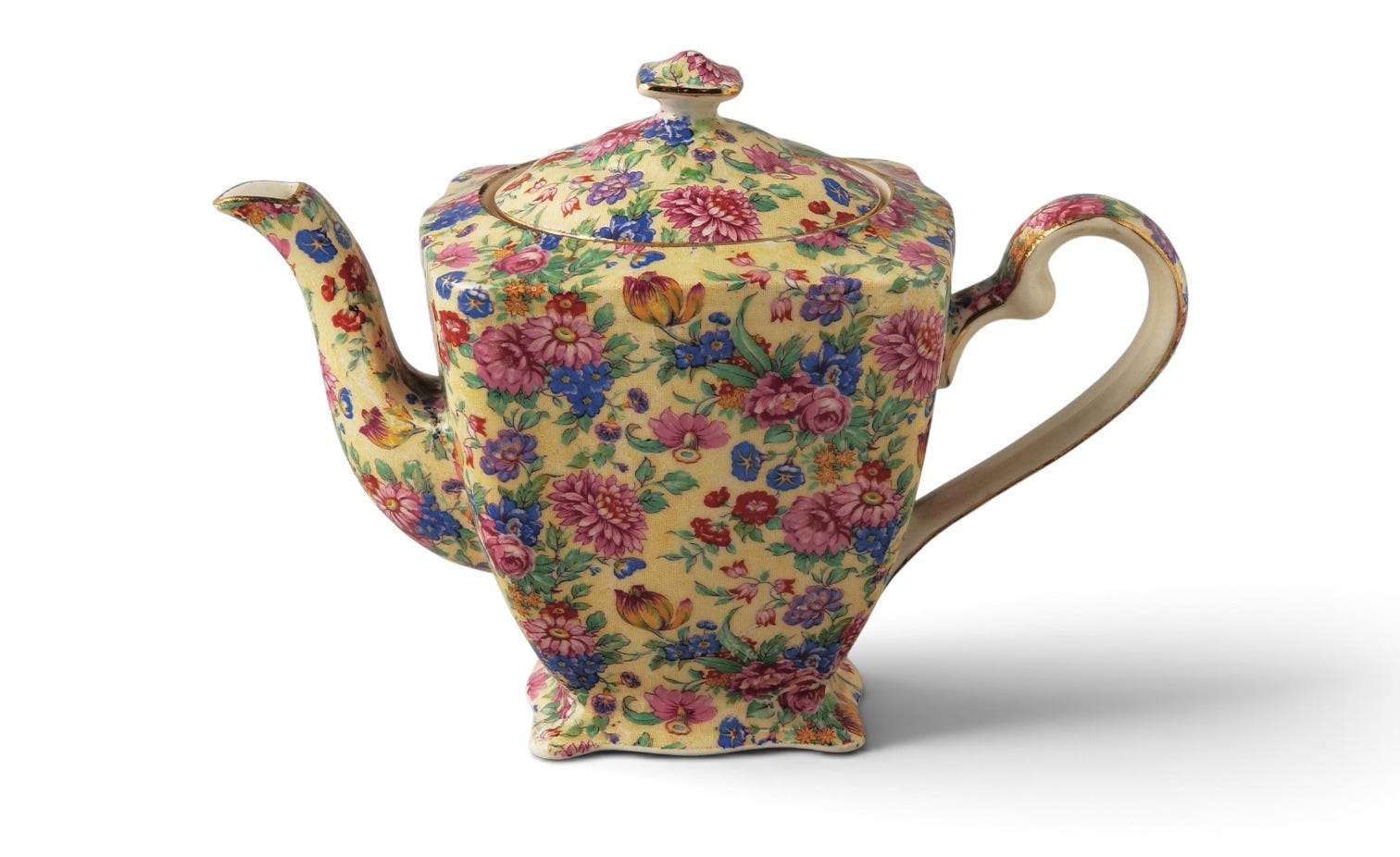
In terms of collecting, variety and financial value, Royal Winton tops the bill. Some patterns, such as ‘Hazel’ or ‘Kinver’, are more sought-after and valuable than others, such as Summertime, which was a steady seller in its day and, as such, was produced in large numbers. In general, the more chintz the better, so look for as close to complete coverage of a form as possible.
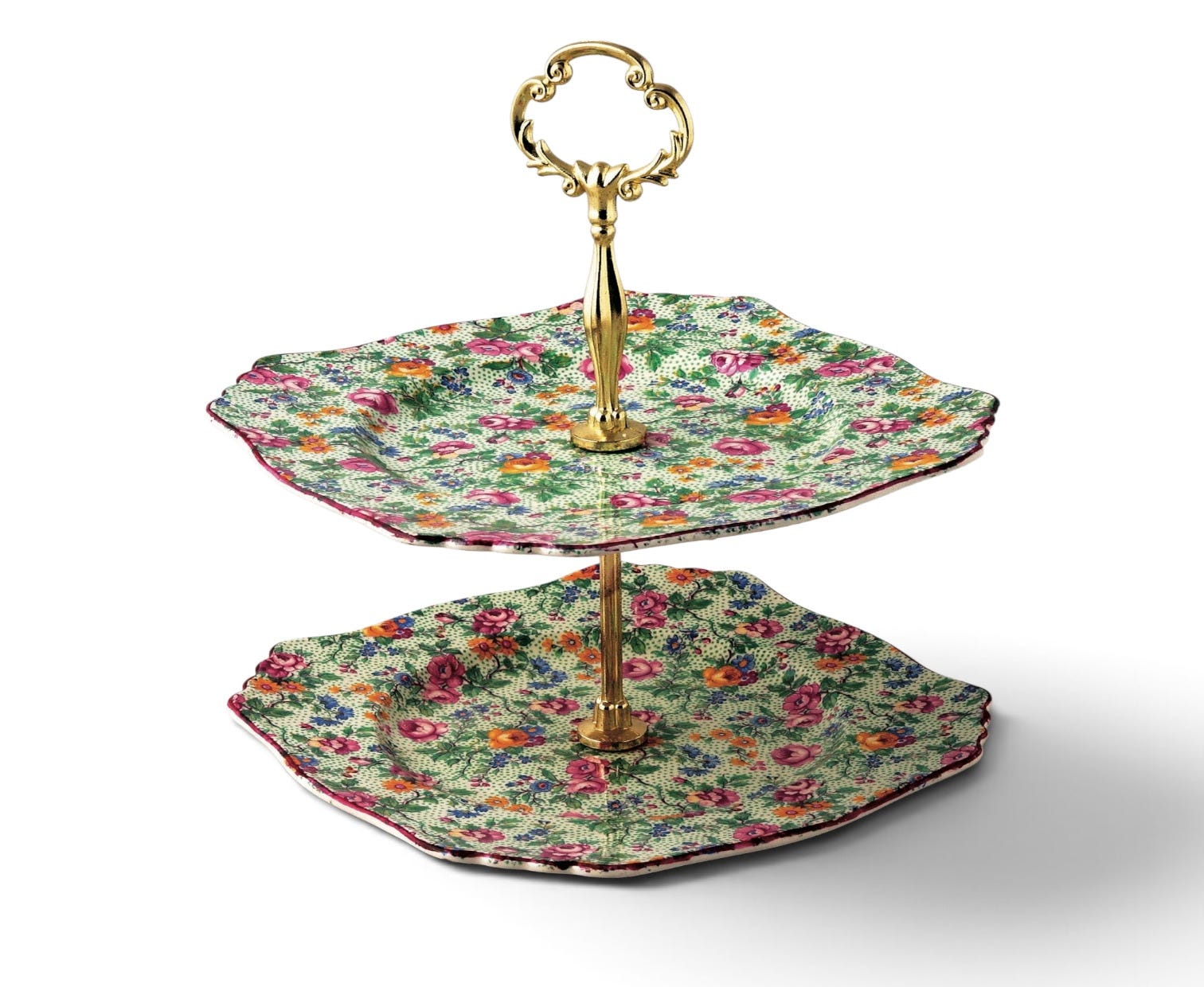
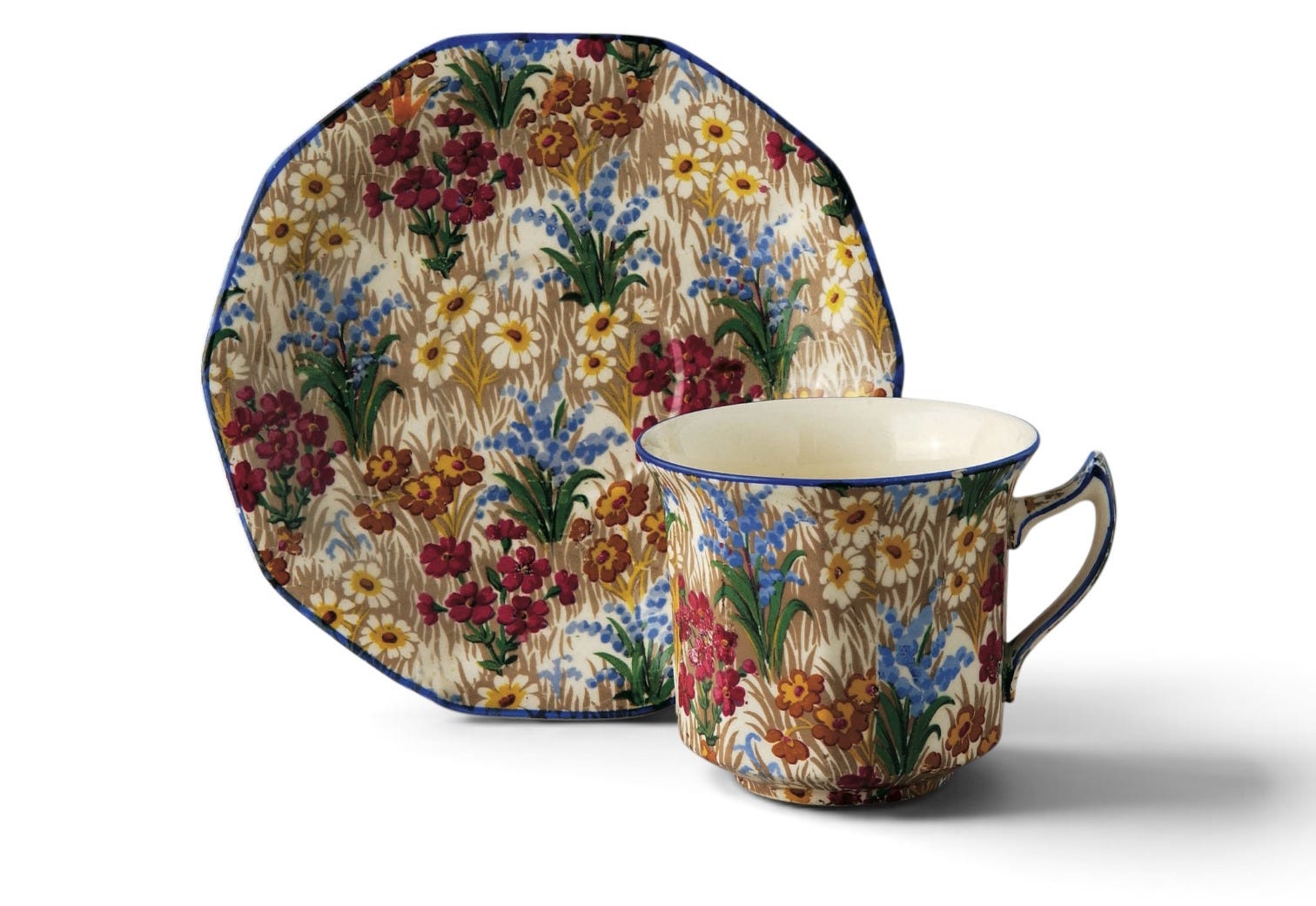
Shape counts too. Teapots will fetch higher sums than teacups and saucers, and scarcer shapes such as intact and complete cruet sets, jam pots and similar, will usually fire a Grandmillenial’s heart. Look out for clean-lined, angled Art Deco shapes, and desirable shapes such as ‘Ajax’. Plates, which offer a lot of ‘pattern for your pound’, are eternally good sellers. Will we ever see them hung back on walls in groups, I wonder? Cake stands are also sought-after, particularly now, but always check the holes. If the shiny glaze doesn’t run through, it’s been made up recently out of drilled plates.
But I have to address the aforementioned elephant in the room – like so many trad antiques, chintzware has plummeted in value over the past 20 or so years. In 1998, at the apex of the market, a Julia pattern teapot sold for over $4,000 at an American fair! I don’t ever think we’ll see those prices again, but there are clear signs of recovery thanks to a rediscovery of maximalism, pattern, and authenticity (story) amongst some of the new generations, including Gen Z. And for me the reasons behind the return to popularity of chintzware mirror much of what currently looks to be the future of the antiques market.
I don’t think we’ll ever see the huge numbers of dedicated collectors building extensive collections that we did from the 1970s-90s. Diehard collectors searching for that elusive shape and pattern combination will still exist, but there’ll be far, far fewer of them.
Much of the new generation of buyers, to whom chintz ware is often appealing, look to antiques more for style and value, and as a reflection of their individuality. The recent rise of the ‘vintage’ movement is testament to this. So much of it is about ‘the look’, but it’s also about green issues and better quality and value than the high street or main street. A backstory just adds richness to the mix.
These new buyers will largely buy affordably, and across the board, but to them a collection isn’t necessary. It’s usually about using them as well as displaying them. If something does capture their heart, a few examples are more than enough. But that’s only once they can afford it after the increasing costs of mortgages, student loans, bills, and children.
But don’t despair. Remember when you first got interested in antiques, became hooked and were then swept away? Be grateful that new generations are interested at all. The beguiling allure of antiques has caught another generation. And, just like us, some are sure to get swept away by these wonderful objects that represent history, tell stories, and evoke memories, feelings and passions. Let’s embrace and encourage that and see where it takes us all, and hopefully watch the market bloom beautifully once again.
Really interesting. Learnt something new. Did the chintz patterns on the ceramics ever duplicate known designs (i.e the exact patterns) on the material? Or were they more a generalised idea of chintz? The 19th century jug in your first picture reminds me of a Colefax & Fowler pattern, which I'm sure would have been based on an original historic design.
They're so charming!