

So much is about style these days. And expressing individuality at that. Open any magazine and it’s filled with celebrities trying out a personal take on new look. We all know that fashion goes in cycles and as a result, many look to the past for inspiration. The 1920s and 1930s, when Art Deco sprang to life, are very in vogue now thanks to a raft of period dramas, but we’re yet to see a revival of a staple fashion trend of the period – bakelite bangles.
Found in a myriad of designs and a rainbow of cheerful, bright colours, you can buy into the look for as little as £30, but serious collectors can pay anything up to £5,000 or more for prime examples. Pieces are eminently wearable too, and fit in with today’s combinations of bright colours. You’re also less likely to attract mischievously envious eyes than if you wore the Dior, Chanel or Cartier you lust after!
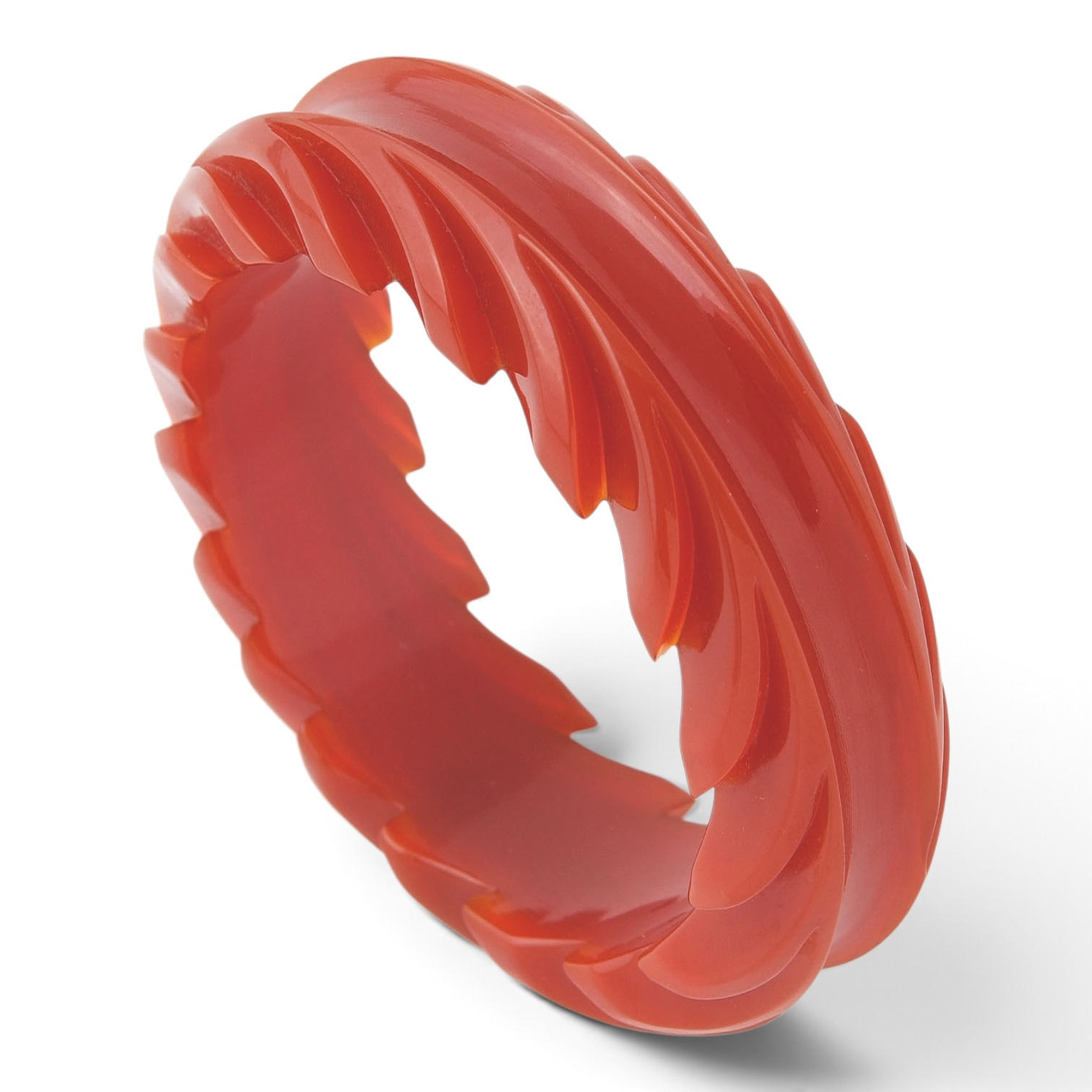
It’s often when we experience extremes of great wealth or hardship that we’re at our most inventive. And that’s exactly the story behind bakelite jewellery. The ‘Roaring Twenties’ saw the birth of the bakelite bangle. Plastics were quite new, having only really been developed in quantity after 1907, when Belgian doctor Leo Baekeland (1863-1944) developed ‘Bakelite’. From that dull brown and black product, a multitude of different plastics were developed that were easy and inexpensive to mould, carve and could be made in the bright, party colours of the ‘Jazz Age’. Think Clarice Cliff or Cassandre - but on your wrist!
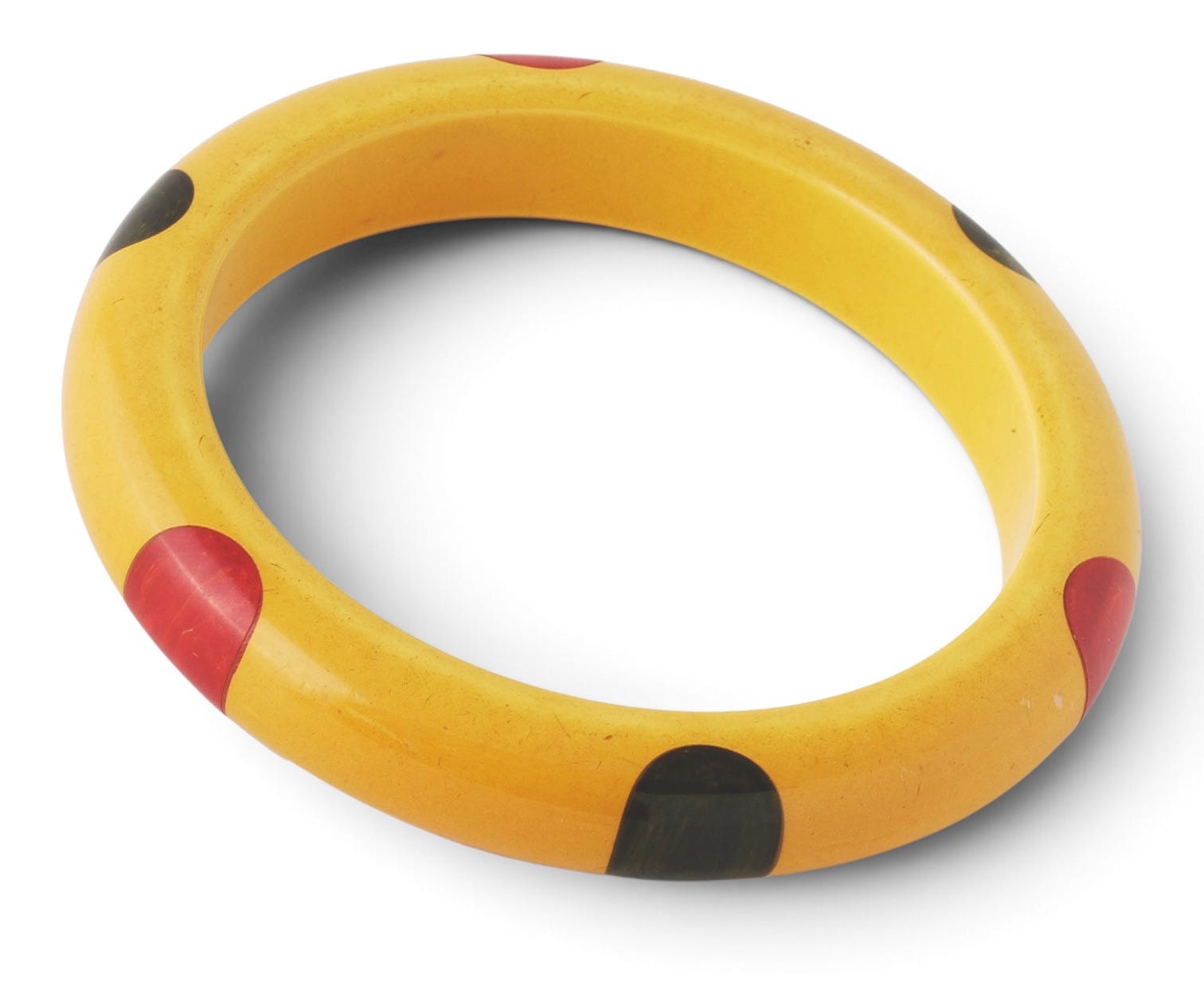
The 1929 Wall Street crash and the global financial disaster that ensued saw an end to the age of fun, frivolity and the Flapper. But the bakelite bangle was a survivor due to its affordability and variety, and it continued to brighten people’s lives through those dark and hard times. Although many socialites and partygoers did not have enough money to buy the fine cocktail jewellery they once had, they could buy bakelite jewellery. And looking at the variety available today, buy they certainly did – in vast amounts!
If you’re looking for a few to wear, just go for it! But if you’re looking to make a canny investment though, it’s worth knowing a few things before you go out. Consider three main areas; size, colour and design. In the world of the bakelite bangle, size does matter - the bigger the better. It’s not just the width of the bangle, but also its thickness. Some people prefer slimmer pieces as larger ones can be a little more weighty, especially if worn in combination, but collectors will always covet the largest lumps.
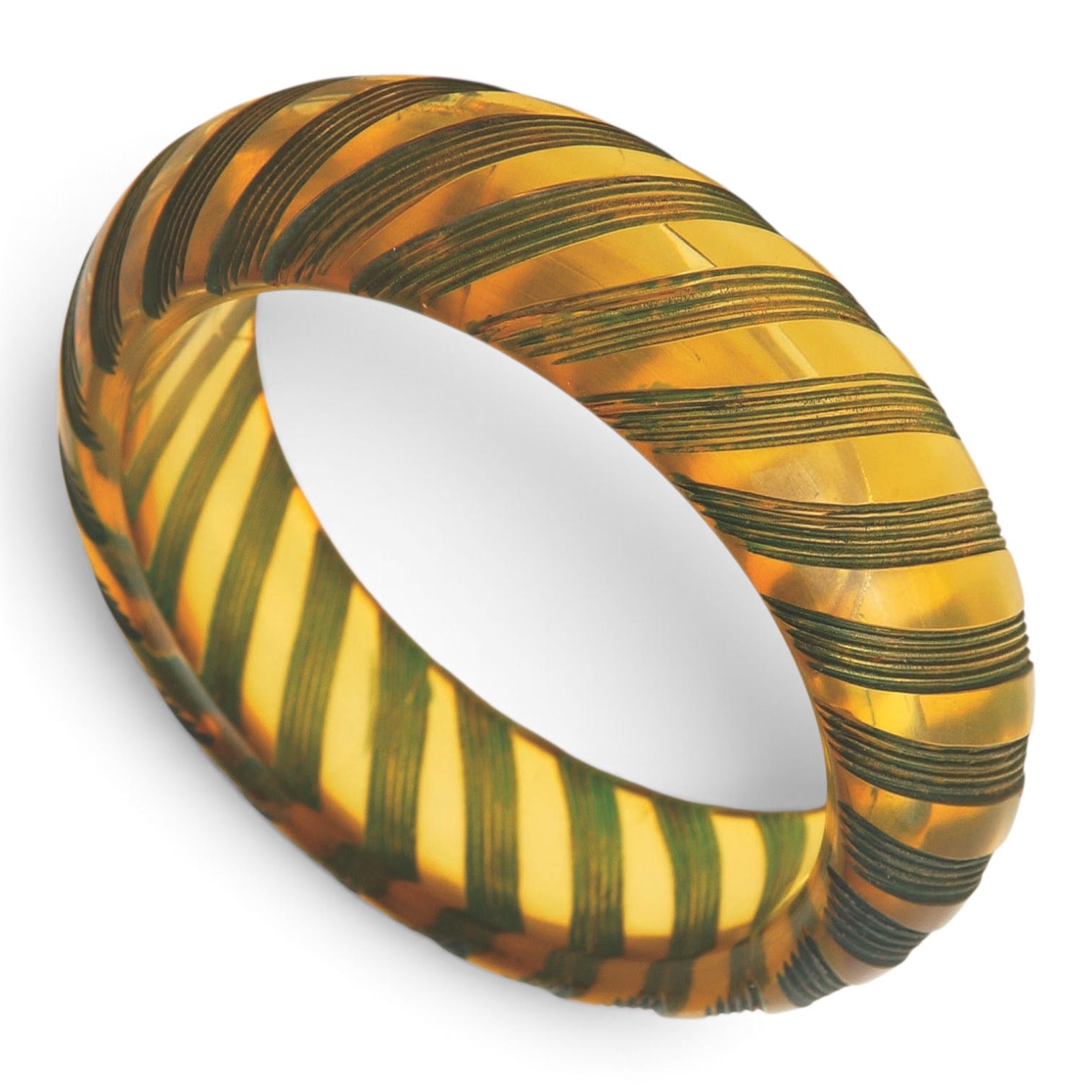
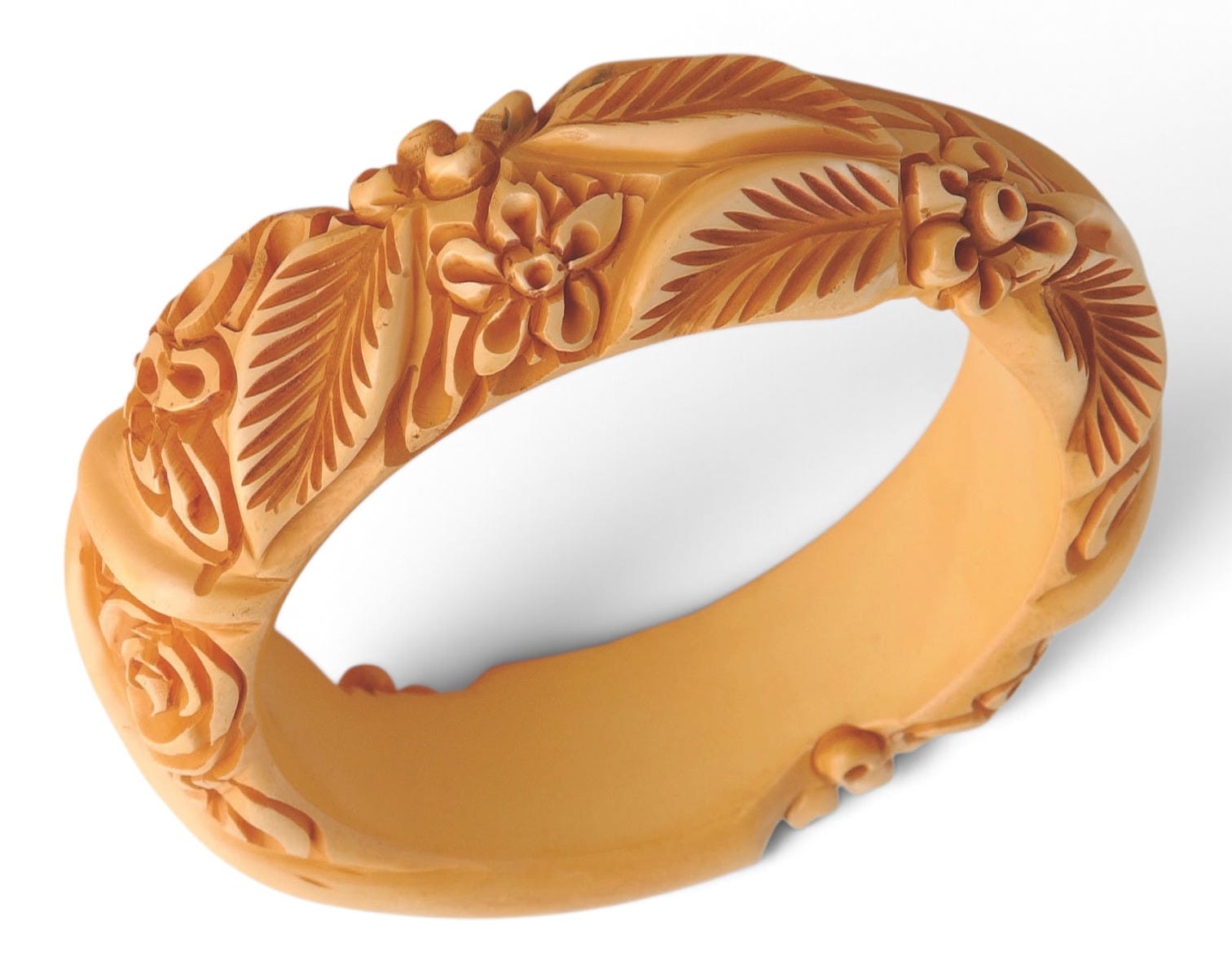
As I said above, colour was one of the most appealing features of bakelite bangles, and this continues to be true today. Bright, bold colours are much more sought after than paler colours such as opaque yellow, sometimes known in the US as ‘creamed corn’ (see the final image). Look out for cherry red and strong oranges and greens. Some colours, such as rose pink and blues, can be rare and sought after for that reason, regardless of any other features. Black can be an exception, but only if it’s appealing from other perspectives, such as a delightful Deco design. This may be cut or inset into it - look for sparkling diamanté or geometric metals.
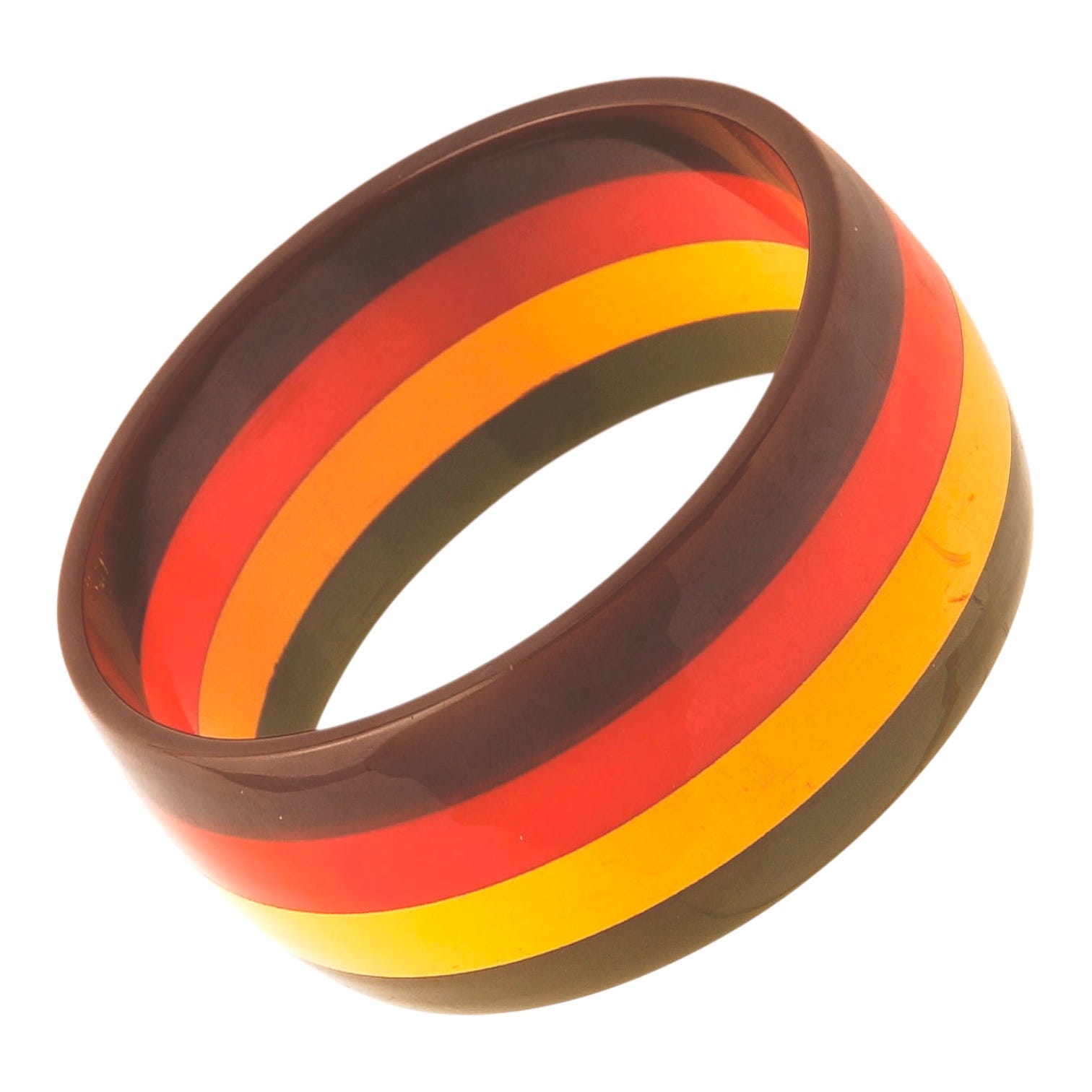
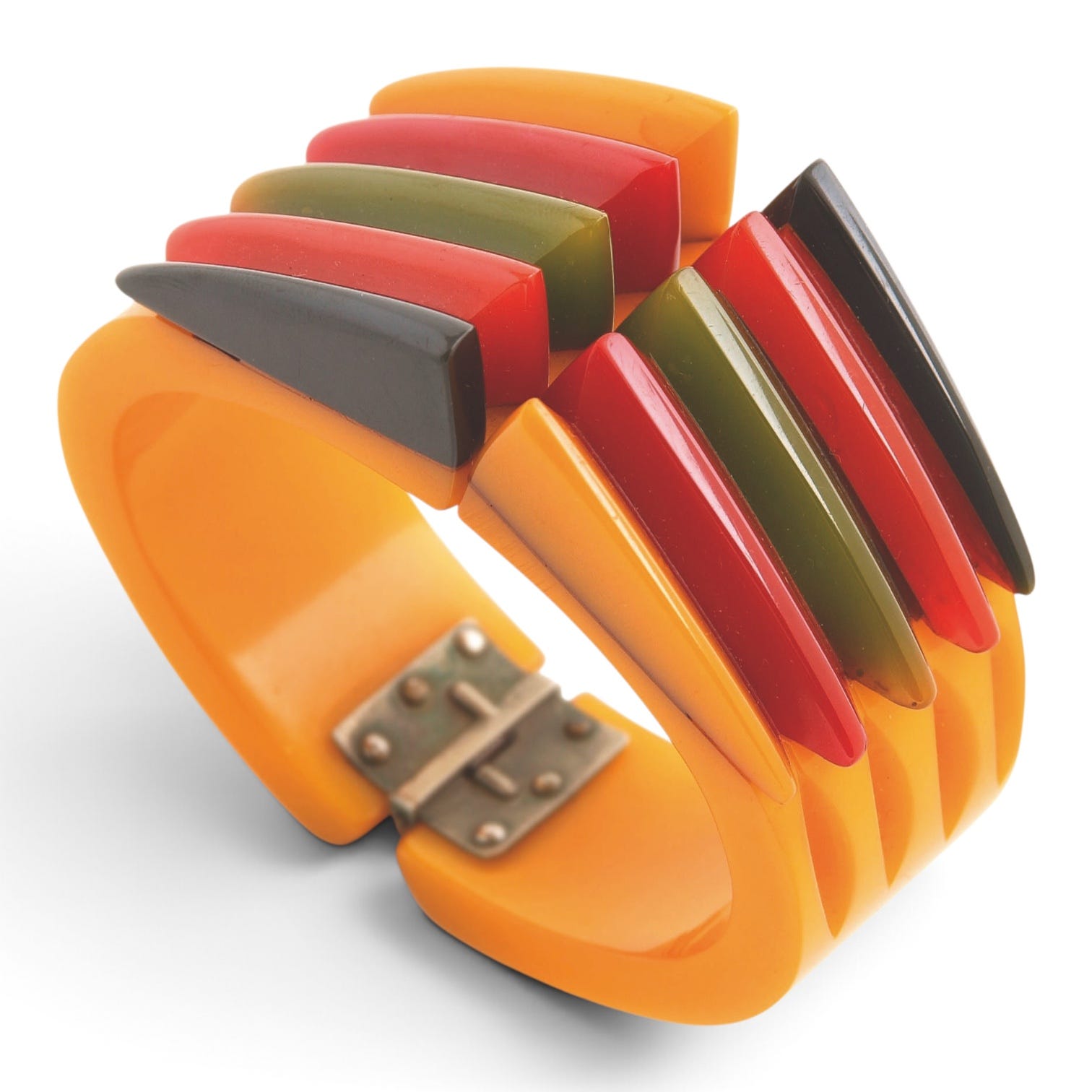
Bangles in combinations of colours will usually command a premium. This can occur in a number of ways. Some plastics may have veins of a different colours, or appear marbled. However the ‘big bucks’ are reserved for assembled, laminated or ‘injected’ designs. These are made up of a number of shaped components in different colours, which are then assembled. Some are found with differently coloured dots, but of particular note are the ‘bowtie’ bangles, where the different colours form angular bow tie shapes. To put it bluntly - the more colours there, the more money on the table. Think around £300-1,200 or more for many colours. I’m very fond of the hard-to-find ‘Philadelphia’ bangles, so-called as they were first introduced in the American city of Philadelphia. These have a number of laminated rings or ridges of multi-coloured plastic and, as ever, the rarer the colours and the bigger the bangle, the better it is. Look out for matching earrings as these can increase value. The auction record I can find so far for bakelite bangles is from 1998 at the (arguable) height of the market when someone paid a staggering $17,000 (£10,200) – just for a plastic bangle!
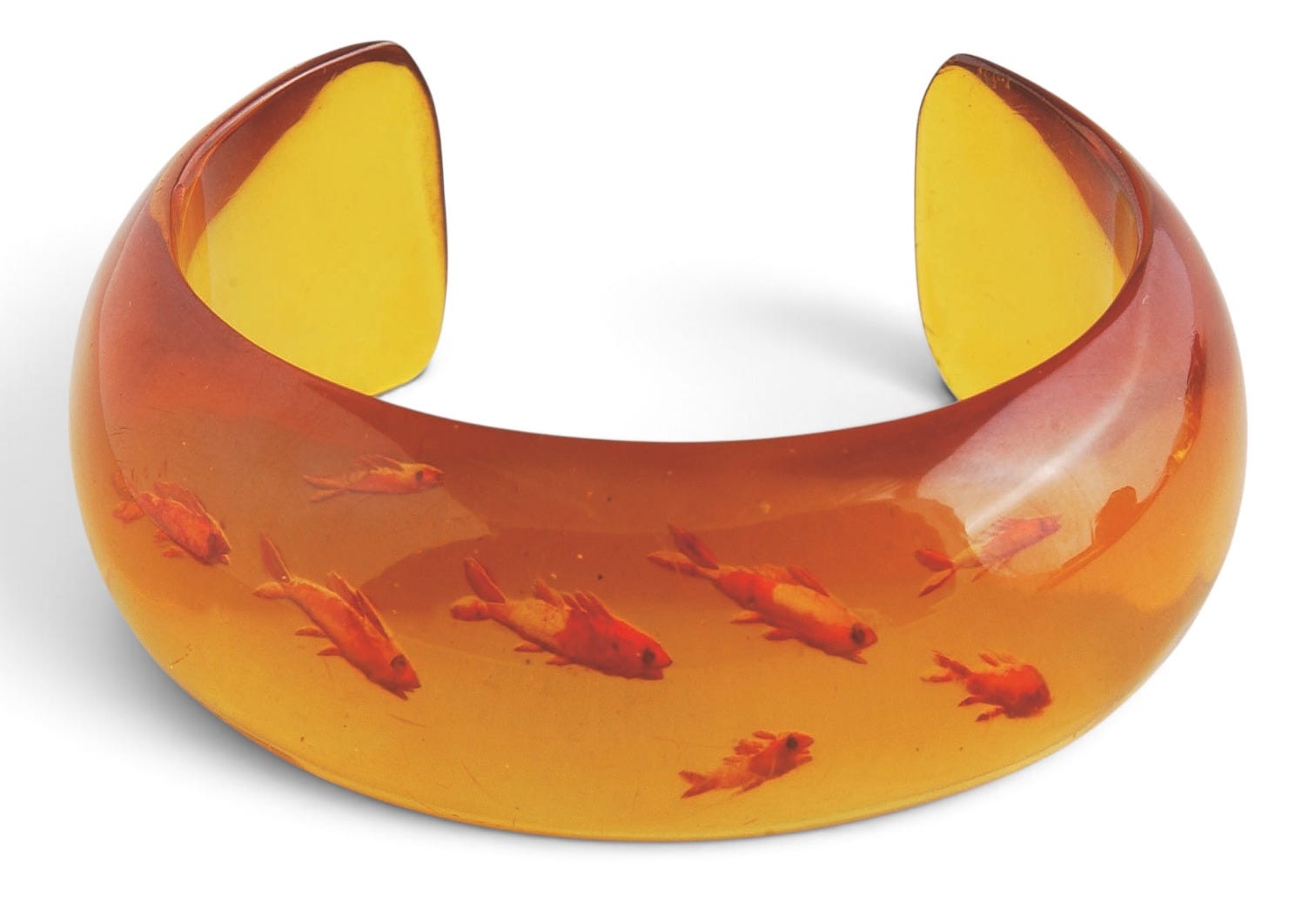
Colour can also indicate which plastic was used – but all are usually grouped under the umbrella term ‘bakelite’. Note the small ‘b’, to differentiate it from true Bakelite, as developed by Baekeland. Many of the plastics used for these are cast phenolics. Look out for the transparent yellowy amber or green ‘apple juice’ bakelite, which is actually a form of Lucite. These are commonly carved from behind (reverse-carved). The designs vary widely, with the most common being stylised flowers or leaves, which were produced into the 1950s and beyond, diminishing in size and complexity as they went. Animals such as goldfish (below) are sought after, with other animals such as frogs being scarcer still. Many of these hollowed out designs are filled with opaque colour, taking them to another level.
Thinking about this form of decoration brings us on to the final feature to look out for – the design. As with size and colour, big and bold is beautiful. Chunky bangles with deep carving, perhaps in stylised Art Deco floral patterns, are highly desirable. Many of these were hand-carved, and this adds value. Undecorated bangles or those with cross hatched or similarly simple machined patterns are much less valuable, but can offer an affordable entry point into the area, starting at around £20-50 or so.
So, you’ve found a piece you simply must have. Hold on for just a moment more. Examine the piece closely, turning it around in you hands, feeling it as you go. Look out for chips, cracks (which may be a little dirty, so will look like hairs) and uneven areas that have been chipped and polished down. Cracks on assembled multi-coloured pieces are particularly serious. I’m afraid that fakes and reproductions also exist. Handle as many authentic examples as possible at fairs or trusted dealers’ shops as learning the feel will help you not to make a mistake. Nothing beats handling when learning, even reading articles online ;-) Visually, the colour and transparency will be different and later reproductions are often lighter in weight.
Some paler, pastel coloured bangles date from the 1950s onwards - with these, the plastic feels somehow ‘cheaper’ in the hand and definitely lighter in weight. They’re also usually much slimmer in size with moulded or basic machine-cut patterns. Mould lines (straight, and often hidden within the design) are another tell-tale sign of more modern pieces. Don’t be put off by all this though as there’s much fun to be had once you’ve got the basics.
But the real basic is to wear them, and enjoy wearing them. More so than many other collectables, these look truly fantastic when they’re being used – especially in combination. Be ahead of the fashionistas – bring on the bakelite bangles!